
Nearly everything in modern civilization can be traced back to the advent of agriculture, which transformed Homo sapiens from a nomadic species into a settled one. The domestication of animals and cultivation of crops on fertile lands have led to the development of complex communities and the growth of societies we recognize today.
For over 12,000 years, agriculture has paved the way for the evolution of human civilization. However, agriculture is more than just planting crops and raising animals; it also includes aquaculture, a practice both ancient and modern that involves the cultivation of aquatic organisms under controlled conditions. Originating approximately 4,000 years ago in China with the farming of carp, aquaculture has since spread worldwide, adapting to diverse cultural and environmental contexts—from the Roman Empire to the Indigenous tribes of North America and the islands of Hawaii.
A notable innovation in pre-Columbian Mesoamerica was the development of chinampas. These “floating gardens” were artificial islands created in lake regions, notably especially the Valley of Mexico. Chinampas stacked layers of vegetation, mud, and decayed plant matter to create some of the most productive plots of land ever known. Providing several harvests per year, they were an efficient use of space and resources, providing significant yields in small areas.
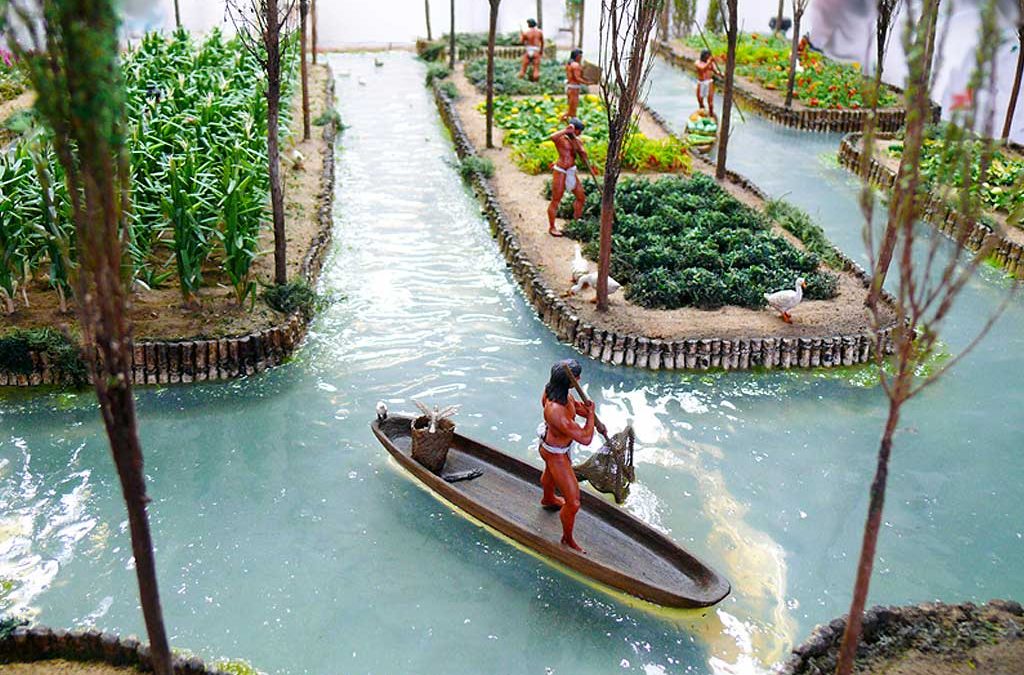
Depiction of an ancient Aztec Chinampa of Central America.
As with everything on earth, agriculture has evolved drastically as a result of new technologies. Perhaps the most influential of all was the plough – revolutionizing farming by harnessing animal power to allow us to seed the rich topsoil just beneath the hard packed surface. Yields and productivity increased overnight. However, the overuse of such techniques has led to soil degradation and loss of biodiversity, reminding us of the risks of overdependence on a single approach.
The Industrial Revolution ushered in the era of mechanized farming, the introduction of genetically modified organisms (GMOs), and advanced water management systems – all dramatically increasing productivity. Today, the agricultural industry faces challenges such as sustainability and environmental conservation. This has driven a diversification of farming techniques, including the re-invention of ancient practices integrated with modern technology to enhance efficiency. As we address these contemporary issues, ancient practices like chinampas offer valuable insights into efficient resource management.
Innovation and entrepreneurship and woven into the fabric of Alberta, and the agriculture sector is no exception. NutraPonics, established in 2014 on a 17-acre piece of land outside Sherwood Park, was the largest indoor vertical aquaponic farm in Canada when its doors opens and ushered in millions of dollars of investment capital.

Photo of NutraPonics Canada Corporation, based in Strathcona County.
The province is also home to several other innovative systems and organizations:
- Bar None – the conversion of a ranching barn into a land based Barramundi system
- GoodLeaf Farms – indoor vegetable farm using agriculture technologies
- NuLeaf Farms – offering small personal to large scale commercial options
- Lovingly Made Ingredients – plant based ingredients for the food market
As we plant our backyard and community gardens this weekend, let’s not forget where we’ve come from and where technological advancements have taken us.
Whatever your organizational objectives are, there is an agricultural application. Let us help you connect the dots.
Stay tuned for series 3, where I’ll discuss funding and programming in Alberta.
Happy gardening.


